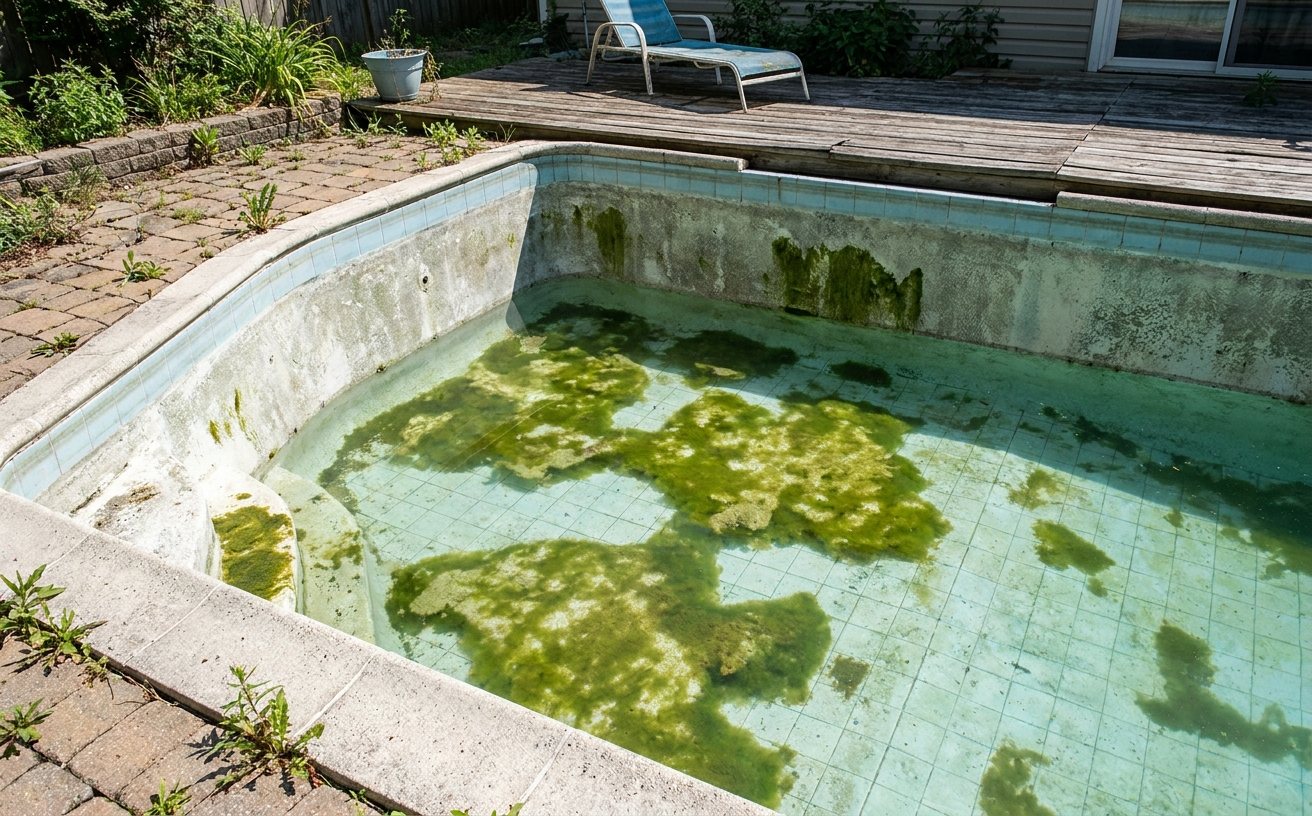
The Color in Your Pool Is Trying to Tell You Something
You walk outside and notice the water has shifted color. Not cloudy. Not milky. Actually green. Or maybe yellowish around the steps. Or perhaps there are dark spots forming along the grout lines that brushing does not seem to remove.
Algae is the most visible problem a pool owner will ever face. It is also one of the most misunderstood, because not all algae are the same. The color you see is actually a clue about what kind of organism you are dealing with, how aggressive it is, and what it will take to eliminate it.
Treating all algae the same way is one of the most common reasons treatments fail. The approach that clears green algae in two days might barely dent black algae. Understanding the difference is the first step to getting your water back.
Green Algae: The Frequent Visitor
Green algae is by far the most common type found in residential pools. It turns the water a greenish tint and can form a slimy layer on the walls and floor. Left unchecked, it can turn an entire pool green within forty-eight hours.
The good news is that green algae is also the easiest to treat. It responds well to shock treatments, brushing, and good filtration. The standard approach is to brush all surfaces, shock heavily at dusk, and run the pump continuously for twenty-four to forty-eight hours.
Green algae typically appears when chlorine levels drop too low for even a short period. A few days of missed maintenance during hot weather is enough to give it a foothold. Once it appears, quick action prevents it from getting worse.
What Green Algae Needs to Thrive
- Warm water temperatures above eighty degrees
- Low or inconsistent free chlorine levels
- Poor circulation in corners and behind ladders
- High phosphate levels from organic debris
Yellow Algae: The Stubborn One
Yellow algae, sometimes called mustard algae, is less common but significantly more persistent than green algae. It typically appears as a yellowish-brown film on shaded surfaces: the undersides of steps, behind ladders, and in corners that get little direct sunlight.
What makes yellow algae frustrating is its resistance to normal chlorine levels. Even at three to five ppm free chlorine, yellow algae can survive. It often returns after treatment because chlorine alone does not penetrate the protective layer the algae creates around itself.
Treatment requires a combination approach. Brushing is essential to break through the protective coating. Follow with a high-dose shock treatment, and add an algaecide specifically formulated for yellow algae. Multiple treatments may be necessary.
Learning to identify the different types of pool algae early saves time and prevents wasted effort on treatments that are not suited to the organism you are actually fighting.
Black Algae: The Deep-Rooted Invader
Black algae is the most difficult type to eradicate. It appears as small dark spots, usually on plaster or concrete surfaces. These spots look like dirt or stains, but they are actually colonies of algae with deep root systems that extend into the pool surface.
Brushing alone will not remove black algae. In fact, brushing without proper chemical treatment can spread it to new areas. The roots remain intact and regrow within days.
Effective treatment requires aggressive and sustained effort.
- Brush the black spots vigorously with a stiff wire brush to break the protective outer layer
- Apply a concentrated algaecide directly to the spots and let it sit for at least thirty minutes
- Shock the pool at triple the normal dose
- Run the pump continuously for at least forty-eight hours
- Repeat the brushing and shocking process every two to three days until the spots are gone
Black algae is almost always a sign of chronically low chlorine levels combined with poor circulation. If it appears once, it is likely to return unless the underlying maintenance routine changes.
Why Algae Keeps Coming Back
Treating the visible algae is only half the battle. If the conditions that allowed it to grow have not changed, it will return. The most common underlying causes are inadequate chlorine, poor circulation, and high phosphate levels.
Phosphates are a food source for algae. They enter the pool through leaves, fertilizer runoff, and even some municipal water supplies. Testing for phosphates and using a phosphate remover when levels are high can dramatically reduce the likelihood of algae returning.
Circulation matters because algae takes hold in stagnant areas first. Make sure return jets are directed to create a circular flow pattern. Brush dead spots regularly. Run the pump long enough to turn over the entire volume at least once per day.
Building a Defense That Lasts
The most effective algae strategy is prevention. Maintaining free chlorine between one and three ppm, brushing the pool weekly, and running the pump at least eight hours a day creates conditions that algae cannot easily penetrate.
Add a weekly maintenance dose of algaecide during the hottest months. This provides a secondary line of defense that catches any spores that survive the chlorine barrier.
Test your water regularly and respond to changes immediately. Algae does not wait for a convenient time to appear. A pool that gets consistent, proactive care rarely develops algae problems serious enough to require emergency treatment.
The color in your water is a signal. Learn to read it correctly, and you will spend far less time fighting algae and far more time enjoying the pool.
Related Article
Nuggets vs Timberwolves Match Player Stats & Rivalry Breakdown

Poker88: A Complete Guide to Online Poker Entertainment